
In modern site management—from busy parking lots to strictly controlled warehouses—effectively delineating areas, guiding traffic, and warning of potential hazards is a core challenge. The yellow and black plastic safety chain emerges as the ideal solution: a cost-effective, highly visible tool designed specifically for these tasks.
Why Yellow and Black is the Universal Color Code for Safety Chains
Have you ever wondered why traffic signs, warning tapes, and safety barrier chains consistently use a yellow and black combination? This choice is intentional. It’s a universal language of caution based on human evolution, visual science, and established international standards.
An Instinctive Warning Signal from Nature
In the natural world, creatures that pose a threat, such as wasps and bees, feature yellow and black warning coloration (Aposematism). This striking pattern is ingrained in our brains as an intuitive signal for “danger, keep away.” A yellow and black plastic chain taps into this subconscious alert system.

Engineered for Maximum Visual Contrast
Scientifically, yellow is one of the most visible colors to the human eye. When paired with deep black, it creates the highest possible luminance contrast. This ensures the warning chain is noticed quickly, even in low light, fog, or from a distance, significantly reducing reaction times.
The Standard for International Safety Regulations (OSHA, ANSI)
Industrial safety regulations worldwide have adopted this color scheme for indicating physical hazards.
- United States: OSHA (Occupational Safety and Health Administration) and ANSI (American National Standards Institute) standards mandate yellow and black for marking trip, fall, and “watch your step” hazards.
- Europe & Others: The ISO 3864 standard is followed by many countries, using these colors to signify potential danger on safety signs.
Choosing a yellow and black plastic chain means deploying a safety communication system that is understood globally.
Core Benefits of Using Plastic Safety Chains
For purchasing and facility managers, plastic barrier chains deliver tangible benefits in performance, cost, and efficiency.
Built for the Outdoors: UV and Weather-Resistant Durability
Unlike metal chains that rust and degrade, high-quality outdoor plastic chain is engineered for longevity. Manufactured with UV-resistant properties, it withstands intense sun and harsh weather without becoming brittle or fading, which significantly reduces the frequency of replacement.
Lightweight and Versatile: Effortless Transport and Water Applications
Lightweight plastic chain offers two major advantages:
- Extremely Portable: A single person can easily carry and deploy an entire 100 ft roll of plastic chain. This dramatically improves on-site efficiency compared to heavy metal alternatives.
- Floats on Water: Its low density also makes it ideal for creating floating warning lines at marinas, pools, or docks.
Cost-Effective and Low-Maintenance: Save Time and Labor Costs
Speed is essential when establishing temporary restricted zones. This chain can be quickly attached to traffic cones or stanchions in minutes. It requires no painting and cleans easily with soap and water, delivering significant long-term savings.
Common Applications for Yellow and Black Barrier Chains
This versatile tool is used across countless industries for safety, guidance, and restriction.
Parking Lot and Driveway Control
Use a plastic chain for driveways or parking garages to clearly direct vehicle flow. Paired with traffic cones, it’s a highly effective method for marking entrances, exits, and no-parking zones.
Warehouse Safety and Construction Site Barriers
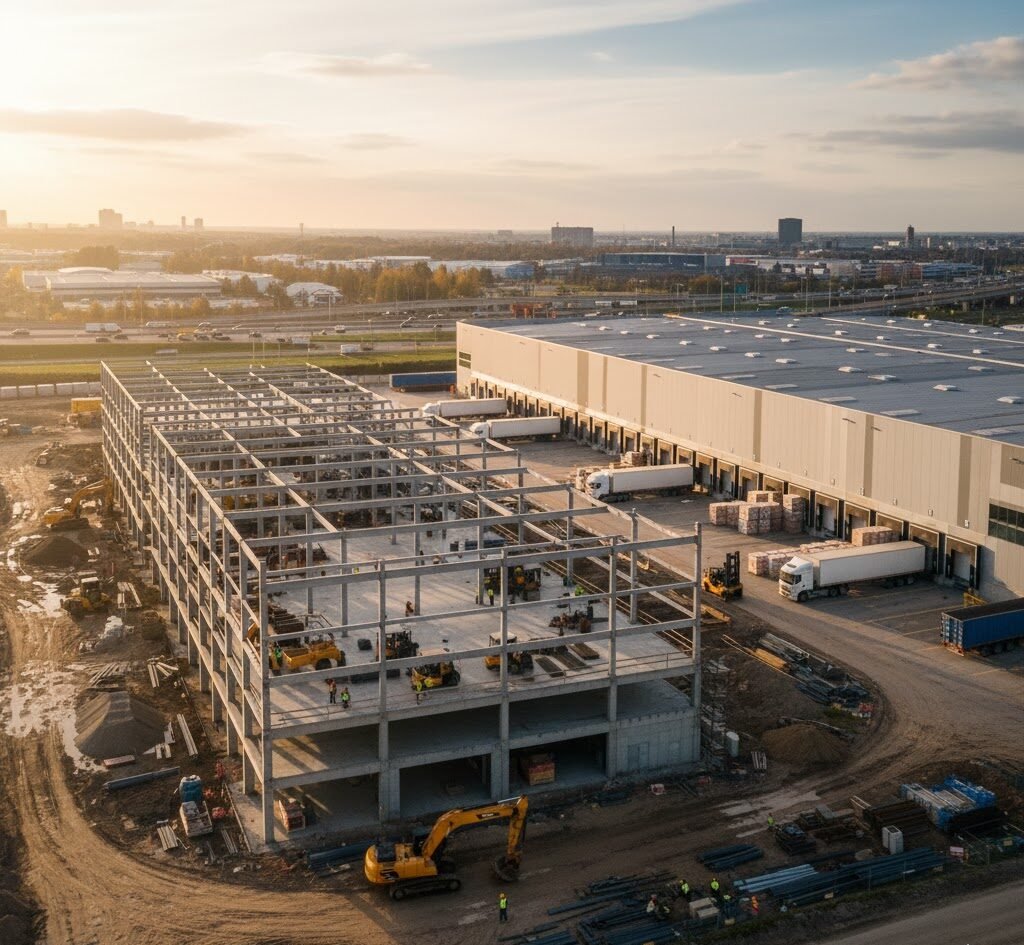
In industrial environments, a construction safety chain is essential for rapidly cordoning off temporary areas. It’s perfect for marking hazardous zones, blocking off aisles during forklift operation, and ensuring warehouse safety compliance.
Crowd Control for Events, Venues, and Retail
A crowd control chain is the ideal low-cost solution for creating queuing lines and separating zones at concerts, festivals, retail stores, and public events. Its bright colors efficiently guide large crowds and help maintain order.
Buyer’s Guide: How to Select the Right Plastic Chain


Choosing the right product is key to maximizing its benefits.
Choosing the Right Size, Thickness, and Length
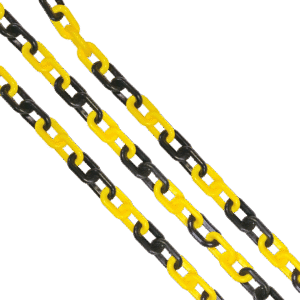
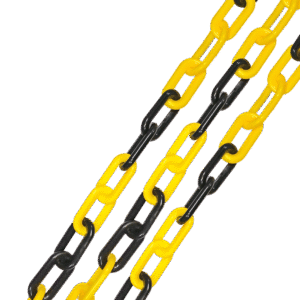
Plastic chains typically come in different link sizes, referred to by diameter (e.g., 6mm, 8mm) or link width (e.g., 1.5-inch, 2-inch).
- 6mm or 1.5-inch Chain: Best for indoor or light-duty applications.
- 8mm or 2-inch Chain (and larger): More robust and visually imposing, making it the standard choice for parking lot chains, construction sites, and high-traffic areas. Chains are often sold in continuous rolls (e.g., 50 ft, 100 ft) or by the foot.
Essential Accessories: Stanchions, Cones, and Connectors
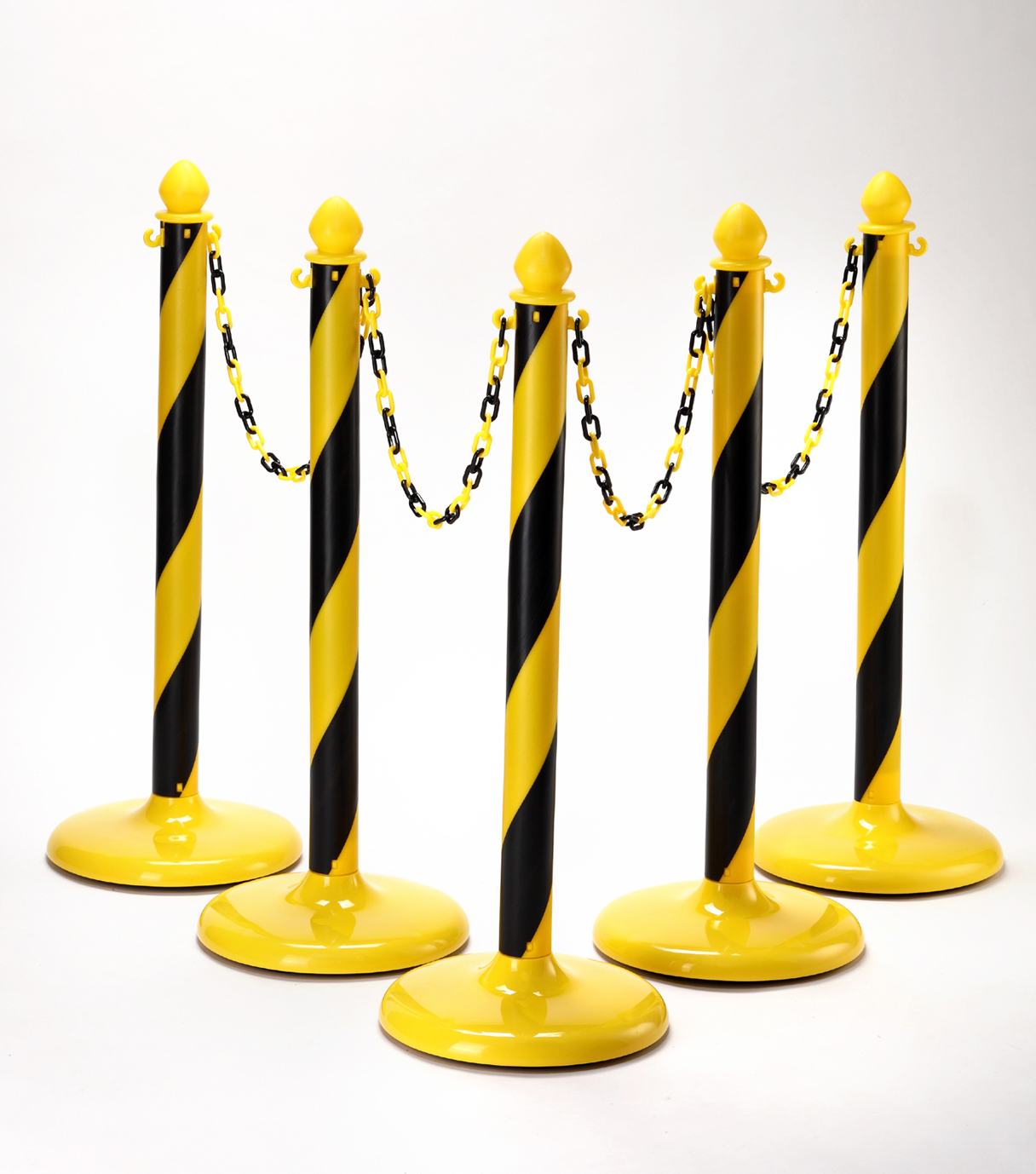
To be effective, plastic chains require supports. Pair them with the right accessories for a complete system:
- Traffic Cones, Stanchions, and Delineator Posts: The most common supports for creating temporary or semi-permanent barriers.
- Connectors and Hooks: Use S-hooks and master links to easily attach, extend, or repair your chain.
Conclusion: The Smart Choice for Your Safety and Crowd Control Needs
Combining a universally understood high-contrast warning with excellent weather resistance and outstanding value, the yellow and black plastic chain has become an essential tool in modern site safety management. It is a smart investment to effectively reduce accident risks, enhance operational efficiency, and optimize costs.
Frequently Asked Questions (FAQ) about Plastic Safety Chains
Q1: How long does outdoor plastic safety chain last? A: High-quality plastic chains with a built-in anti-UV formula are designed for long-term outdoor use. Under normal conditions, they offer a service life exceeding three years.
Q2: Can I use a plastic chain for lifting or security? A: No. The main function of a plastic chain is as a visual warning barrier for guidance and crowd control. It is not designed for load-bearing, lifting, or as a high-security anti-theft device.
Q3: What is the recommended spacing for posts or stanchions? A: To achieve the best visual effect and prevent excessive sagging, it is recommended that the maximum length of chain between any two posts be 2 meters (approximately 6.5 feet).