
Introduction
In fast-paced business and industrial environments, safety and organization are critical to smooth operations. One of the simplest yet most effective tools for achieving these goals is the chain barrier.
Chain barriers are portable, flexible systems designed to control crowds, direct traffic, and create clearly defined zones. Whether it’s managing warehouse traffic, securing construction sites, organizing parking lots, or guiding event attendees, chain barriers provide a reliable solution for both indoor and outdoor settings.
For industrial facilities, event organizers, warehouse managers, and commercial property owners, chain barriers are essential because they:
- Enhance safety by preventing unauthorized access to restricted zones.
- Improve efficiency by guiding movement and reducing confusion.
- Support compliance with international safety standards through color-coded systems.
Their low cost, lightweight design, and high customizability make them an excellent investment for businesses looking to improve safety and crowd management without heavy infrastructure expenses.
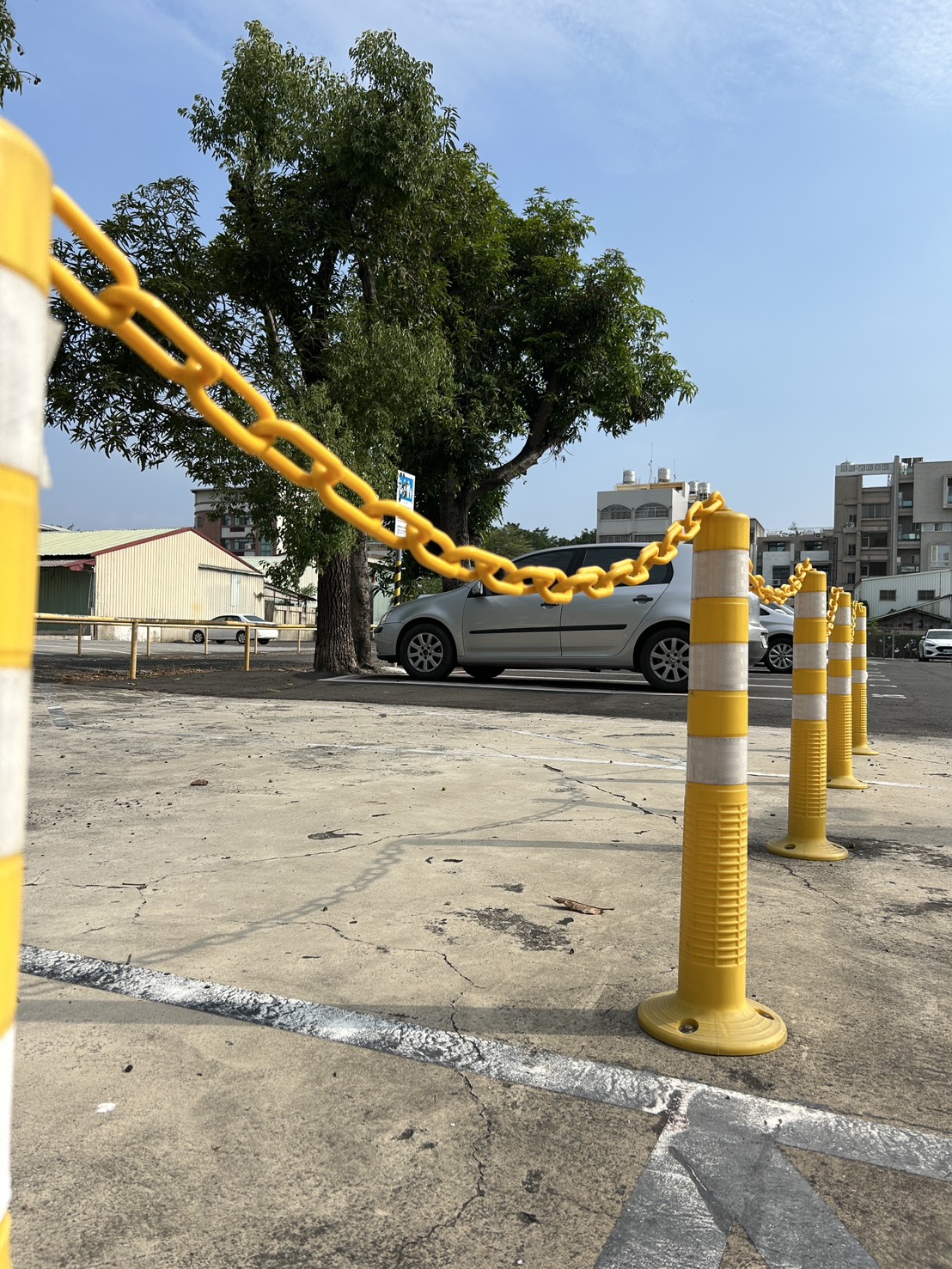
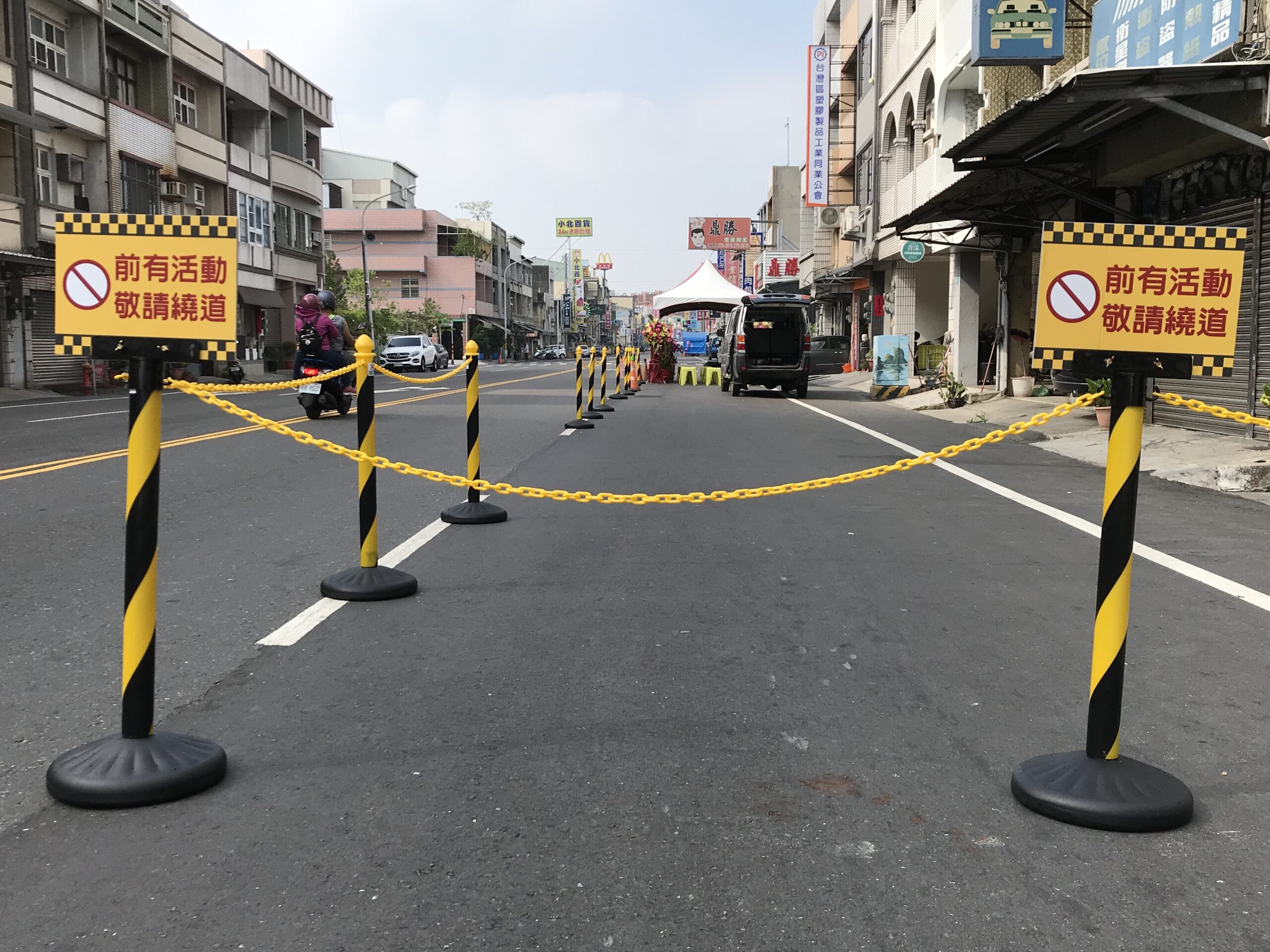
What Are Chain Barriers?
Definition & Core Components
Chain barriers consist of two main components that work together to create a simple yet highly functional safety system:
Plastic Chains
Available in a variety of lengths and vibrant colors for different applications.
Designed to be lightweight yet durable, making them easy to install and reposition.
Safety Posts
The posts act as the primary support structure for the chains.
Different base types are available to suit various environments:
Water-Filled Bases: Adjustable weight for outdoor use.
Weighted Bases: Permanent stability for fixed locations.
Portable Bases: Lightweight for easy transportation and quick setup.
Plastic vs. Metal Barriers: A Quick Comparison
| Feature | Plastic Chain Barriers | Metal Barriers |
| Weight | Lightweight | Heavy |
| Corrosion-Resistant | Yes | No |
| Cost | Lower | Higher |
| Portability | Easy to move | Difficult |
| Colors | Multiple options | Limited |
Summary: Plastic chain barriers are more versatile, cost-effective, and adaptable compared to heavy metal barriers, making them ideal for businesses that need flexible safety solutions.
Business & Industrial Applications
Common Use Cases
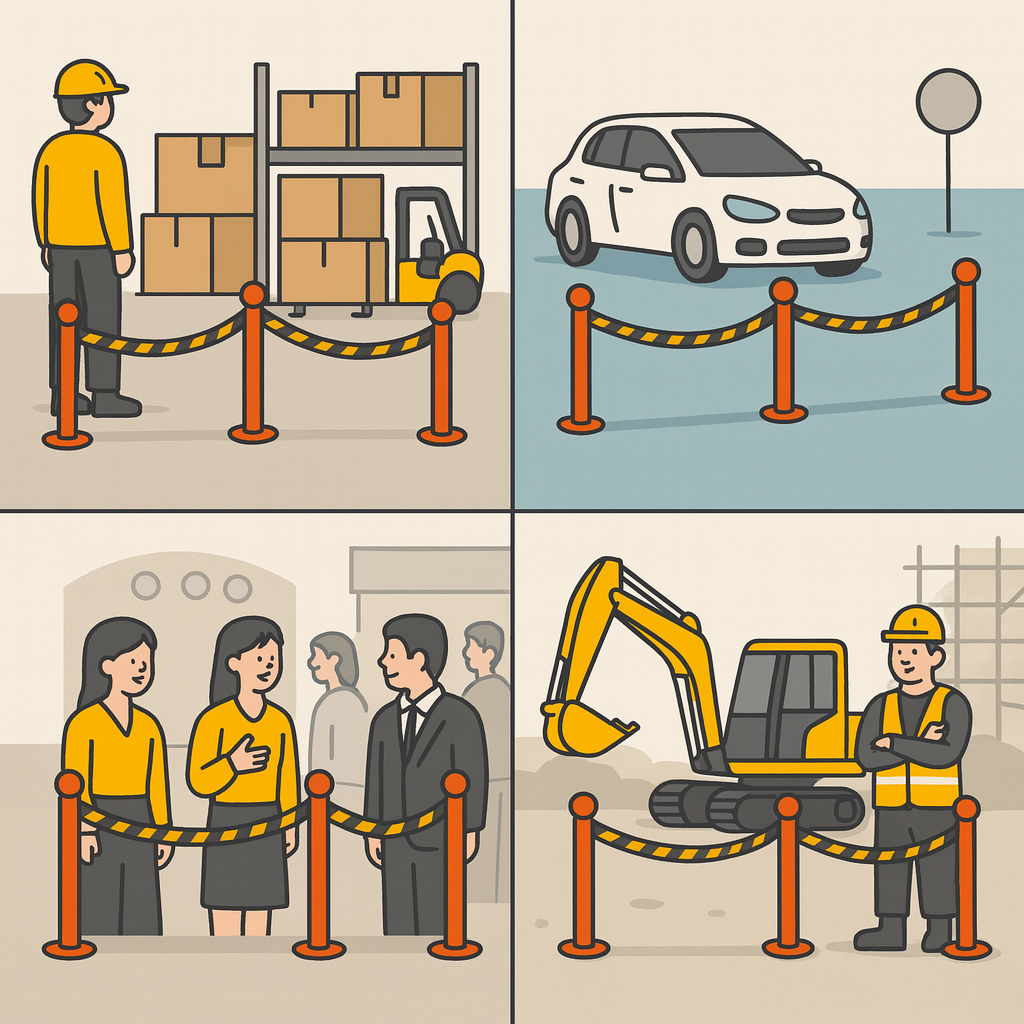
Chain barriers are versatile, making them suitable for a wide range of professional environments. Below are some of the most common applications:
- Warehouses & Factories
- Mark restricted areas to keep employees safe.
- Separate pedestrian walkways from forklift or machinery lanes.
- Highlight areas under maintenance or repair.
- Parking Lots & Traffic Control
- Create temporary roadblocks for events or maintenance.
- Separate vehicle lanes from pedestrian pathways.
- Organize parking zones for better traffic flow.
- Events & Venues
- Manage queues at ticket counters, food stands, or entrances.
- Control crowds during concerts, exhibitions, or festivals.
- Define VIP or staff-only areas.
- Construction Sites
- Establish safety perimeters around hazardous zones.
- Mark areas where heavy equipment is operating.
- Retail Stores & Shopping Malls
- Guide customers during busy shopping seasons.
- Create temporary promotional zones or event spaces.
- Prevent entry to closed or under-maintenance areas.
Case Study Example
A global logistics company faced frequent near-miss accidents between pedestrians and forklifts in its main distribution center.
After installing chain barriers to create designated pedestrian walkways and clearly marked vehicle lanes, the company reported a 35% reduction in accidents within just three months.
This simple, low-cost safety measure not only improved employee safety but also boosted operational efficiency, as workers were able to move confidently within clearly defined zones.
Types of Chain Barriers
Understanding the different types of chain barriers helps businesses choose the right solution for their specific needs. Variations are typically based on material, post base type, and chain color or size.
By Material
- Plastic Chain Barriers (HDPE or PP)
- HDPE (High-Density Polyethylene) and PP (Polypropylene) are the most common materials.
- Key advantages:
- Lightweight and easy to move.
- Weather-resistant for both indoor and outdoor applications.
- Vibrant color options for safety compliance.
- Ideal for warehouses, event venues, and retail environments.
- Metal Chain Barriers
- Built for heavy-duty, permanent setups where durability is paramount.
- Key advantages:
- Superior strength for industrial zones.
- Long-term stability in high-traffic outdoor areas.
- Best suited for construction sites and factory perimeters, though less portable than plastic.
Tip:
For most businesses, plastic chain barriers offer the ideal balance of cost, performance, and versatility.
By Post Base Type
| Base Type | Weight Capacity | Best For |
| Water-Filled Base | 4–6.8 kg adjustable | Outdoor use, wind-resistant setups |
| Fixed Weighted Base | Permanent stability | Warehouses, permanent lanes |
| Portable Base | Light and easy to move | Temporary indoor events |
- Water-Filled Base:
Adjustable weight by adding or removing water or sand. Perfect for outdoor parking lots, event areas, or windy environments. - Fixed Weighted Base:
Heavy and stable, designed for permanent installations such as factory floors or safety zones that require long-term use. - Portable Base:
Ultra-light for quick setup, ideal for temporary conferences, exhibitions, or storefront displays.
By Chain Color & Size
Color coding plays a critical role in ensuring safety compliance and visual clarity in industrial settings:
- Red / White – Danger or hazard zones, such as high-voltage areas or machinery in operation.
- Yellow / Black – Caution or warning zones, often used near loading docks or slippery areas.
- Solid Colors – Used for general crowd flow management, such as separating lines or guiding customers.
Common Chain Thickness & Length Options for B2B Buyers
- 6mm chains – Light-duty use in retail or small event spaces.
- 8mm chains – Standard size for most industrial and commercial environments.
- 10mm chains – Heavy-duty applications where higher visibility and strength are needed.
Pro Tip:
Choose chain thickness based on expected tension, visibility, and traffic volume in the target area.

How to Choose the Right Chain Barrier for Your Business
Selecting the right chain barrier involves analyzing the specific requirements of your facility. Here’s a step-by-step guide for B2B buyers:
Step 1 – Assess Your Environment
- Indoor Use:
- Portable bases and lightweight plastic chains are ideal.
- Focus on aesthetics and color coordination for retail spaces.
- Outdoor Use:
- Opt for water-filled or weighted bases to withstand wind and weather.
- Choose UV-resistant materials for long-term durability.
- High-Risk Areas:
- Consider metal barriers or reinforced plastic systems for added safety.
Step 2 – Determine Required Length & Coverage
Formula to estimate chain length:
Total Chain Length = Number of Posts × Spacing Between Posts
Example:
- For a 50-meter zone using 2-meter spacing between posts:
- 25 posts × 2 meters = 50 meters of chain required.
This ensures full coverage without gaps, maintaining both visibility and safety compliance.
Step 3 – Select Color & Compliance Needs

Align chain colors with international safety standards such as OSHA or ISO guidelines:
| Color | Standard Use |
| Red / White | Danger or prohibited zones |
| Yellow / Black | Caution areas, potential hazards |
| Green / White | First aid or safe zones |
| Blue / White | Information or designated instructions |
Step 4 – Decide on Post & Base Types
Refer back to the Post Base Type Table above to match your selection to the environment and intended application:
- Portable Base: Short-term events and retail.
- Water-Filled Base: Outdoor, windy, or temporary high-traffic zones.
- Fixed Weighted Base: Permanent warehouse or industrial setups.

Installation & Maintenance Guide
Proper installation and regular maintenance ensure your chain barrier system performs effectively and lasts longer.
Installation Steps
- Identify layout and mark positions
- Map out where posts and chains will be placed.
- Prepare the bases
- Fill water-filled bases with water or sand if needed for extra stability.
- Attach chains to posts
- Secure chain hooks to the top of each post.
- Adjust chain tension
- Ensure chains are slightly taut for visibility without over-tightening.
Maintenance Tips
- Regular inspections:
- Check for cracks, fading colors, or loose parts.
- Cleaning:
- Wipe down chains regularly to maintain visibility and professional appearance.
- Prompt replacement:
- Replace worn or damaged posts and chains to keep the system safe and compliant.
Chain Barriers vs. Other Safety Solutions
When evaluating safety barriers, it’s important to understand how chain barriers compare with other options.
| Feature | Chain Barriers | Retractable Belt Barriers | Metal Barricades |
| Cost | Low | Medium | High |
| Portability | High | High | Low |
| Weather Resistance | Excellent | Moderate | Excellent |
| Indoor/Outdoor Use | Both | Mostly Indoor | Outdoor |
| Customizable Colors | Yes | Limited | Limited |
Conclusion:
Chain barriers are the most versatile and cost-effective choice for businesses that require a balance of portability, visibility, and weather resistance.
Buying Chain Barriers in Bulk
Purchasing chain barriers in bulk is the most efficient and cost-effective strategy for businesses and organizations managing multiple facilities or large-scale projects.
Whether you’re outfitting a warehouse network, equipping parking lots, or preparing for large events, bulk buying ensures consistency and reduces operational headaches.
Why Buy Wholesale
- Lower Unit Cost
Bulk orders significantly reduce per-unit pricing, allowing businesses to maximize budgets without compromising quality. - Consistent Quality Across Multiple Sites
A single supplier ensures uniform specifications, making it easier to maintain brand consistency and meet safety standards across different locations. - Reliable Supply for Large Projects
Avoid disruptions by securing a steady supply of posts, chains, and accessories for long-term operational needs.
Example:
A nationwide event management company saved 25% on equipment costs by switching to wholesale chain barrier purchasing, while ensuring consistent safety compliance at all event venues.
Questions to Ask a Supplier
When selecting a chain barrier supplier, procurement managers should evaluate the following factors to ensure a reliable partnership:
- Do they offer OEM/ODM customization?
- Can they produce custom colors, logos, or specific chain sizes to match your branding or operational requirements?
- What is the Minimum Order Quantity (MOQ)?
- Understand the supplier’s MOQ to plan your budget and storage space effectively.
- Lead Time and Shipping Options
- How quickly can they fulfill large orders?
- Do they offer international shipping with flexible options?
- Compliance with Safety Standards
- Ensure products meet OSHA, ISO, or local regulatory guidelines for safety color coding and material quality.
About PINKBRAND – Your Trusted Supplier
When it comes to high-quality chain barriers, PINK BRAND stands out as a trusted partner for businesses worldwide.
- 40+ years of manufacturing expertise with proven quality and reliability.
- Exporting to over 20 countries, serving diverse industries including logistics, construction, retail, and event management.
- Customization options to match your business needs:
- Custom colors for safety compliance or brand alignment.
- Variable chain sizes and post heights.
- Private labeling for distributors and wholesalers.
Looking for reliable chain barriers for your business?
Contact Us Today for bulk orders and customized solutions.
Frequently Asked Questions
How far apart should posts be placed?
For optimal visibility and safety, posts should be spaced 1.5 to 2.5 meters apart.
- Indoor environments: Closer spacing (around 1.5 meters) for tighter crowd control.
- Outdoor or large areas: Up to 2.5 meters for broader coverage while minimizing material use.
Can plastic chain barriers be used outdoors?
Yes! High-quality HDPE (High-Density Polyethylene) materials are weather-resistant and designed to withstand:
- UV exposure from sunlight.
- Rain and humidity, preventing rust or corrosion.
- Extreme temperatures, maintaining structural integrity year-round.
This makes them ideal for parking lots, construction zones, and outdoor events.
What is the typical lifespan of a chain barrier system?
The lifespan depends on factors such as usage frequency, environmental exposure, and maintenance routines.
- Indoor use: 3–5 years with minimal wear.
- Outdoor use: 2–4 years depending on climate conditions and proper care.
Tip: Regular cleaning and timely replacement of damaged parts can significantly extend product life.
Conclusion
Chain barriers are one of the most versatile and cost-effective safety solutions for businesses across industries.
From factories and warehouses to events and retail spaces, they provide a reliable way to guide movement, prevent accidents, and maintain compliance with safety standards.
For long-term success, partnering with a trusted manufacturer is essential. With PINKBRAND, you gain access to:
- Decades of manufacturing expertise.
- Customizable options to fit your brand and operational needs.
- Reliable bulk supply for consistent quality and performance.