
In roadwork, construction sites, and parking management, traffic cones (pylons) are the most essential safety tools. Traditionally, we rely on “caution tape” or “traffic bars” to cordon off areas. However, long-term use reveals several critical pain points:
- Disadvantages of Caution Tape: Prone to snapping in high winds, creates significant plastic waste upon disposal, and often results in a cluttered, unprofessional appearance.
- Disadvantages of Traffic Bars: Their fixed length (in non-telescopic models) makes them bulky to store and reduces transport efficiency in smaller work vehicles.
To achieve a more flexible and durable setup, the combination of “Traffic Cone + Dedicated Ring + Plastic Chain” has become the new benchmark for modern site safety. This article provides an in-depth analysis of three professional cone rings to help you make an objective choice based on your specific site requirements.
Why Should You Move Beyond Traditional Caution Tape?
Switching to dedicated rings and chains not only enhances the visual professionalism of your site but also offers a higher reuse rate and faster deployment. Below is a detailed breakdown of the three primary types of cone rings:
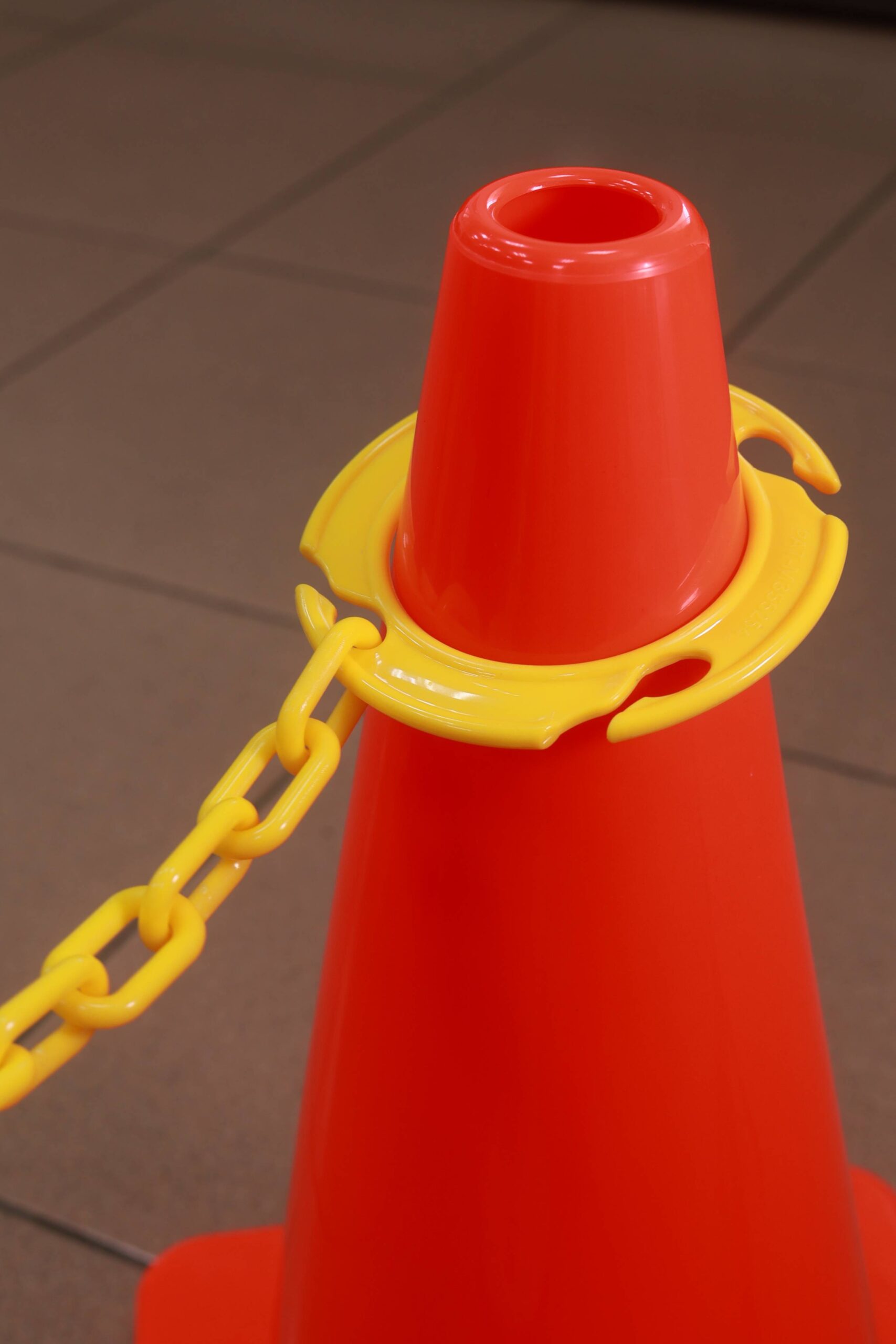
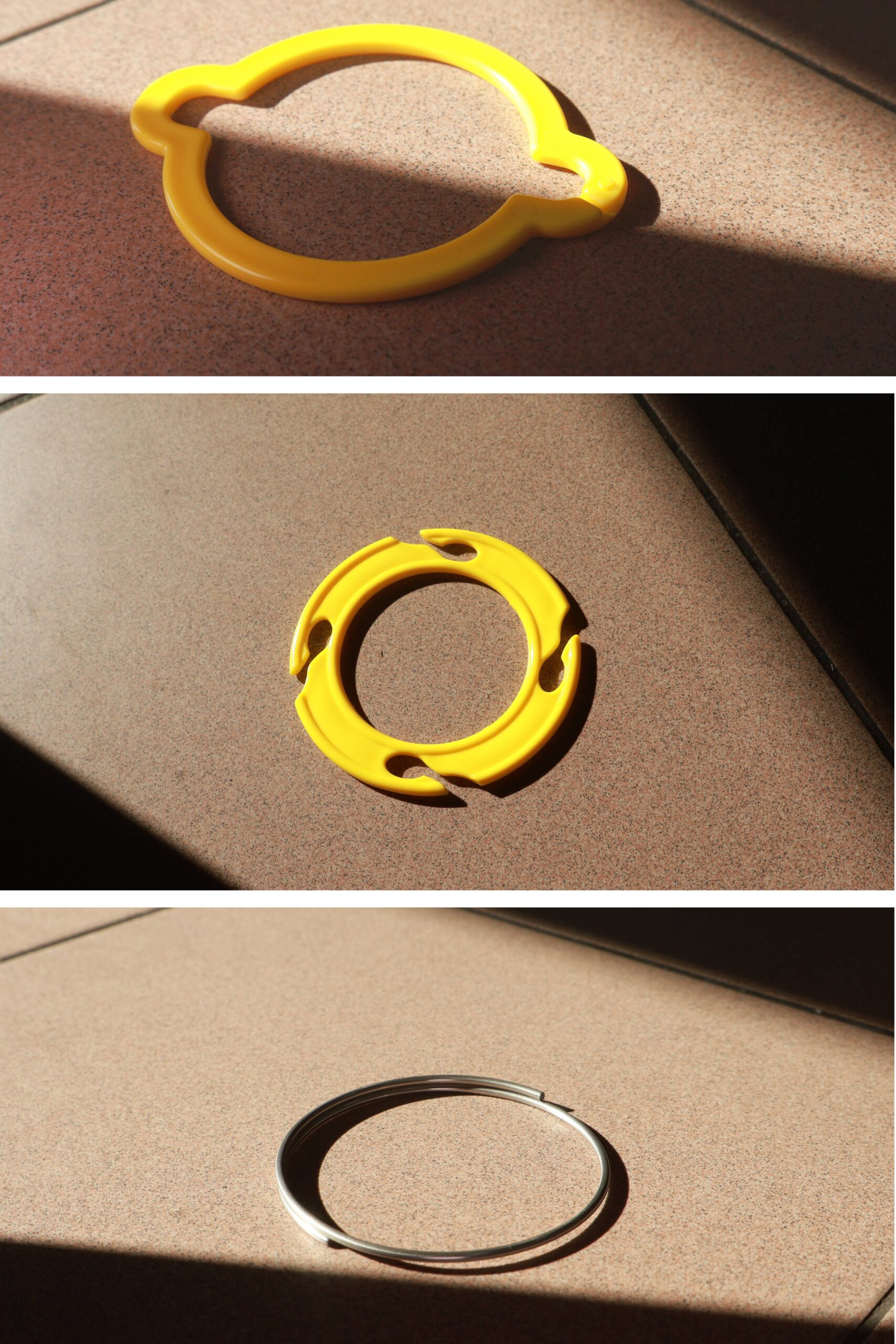
1. The King of Flexibility: Traffic Cone Ring – Type I (4-Way Design)
If you need to cordon off a square area or manage complex intersections, the Type I ring is your most efficient choice.
- Core Design: Features a unique four-way hook system, allowing a single cone to extend chains in four different directions simultaneously.
- Technical Specifications: 8cm inner diameter, perfectly fitting most standard-sized traffic cones on the market.
- Best Scenarios: Indoor partition cordoning, utility box maintenance, and multi-entrance access control.
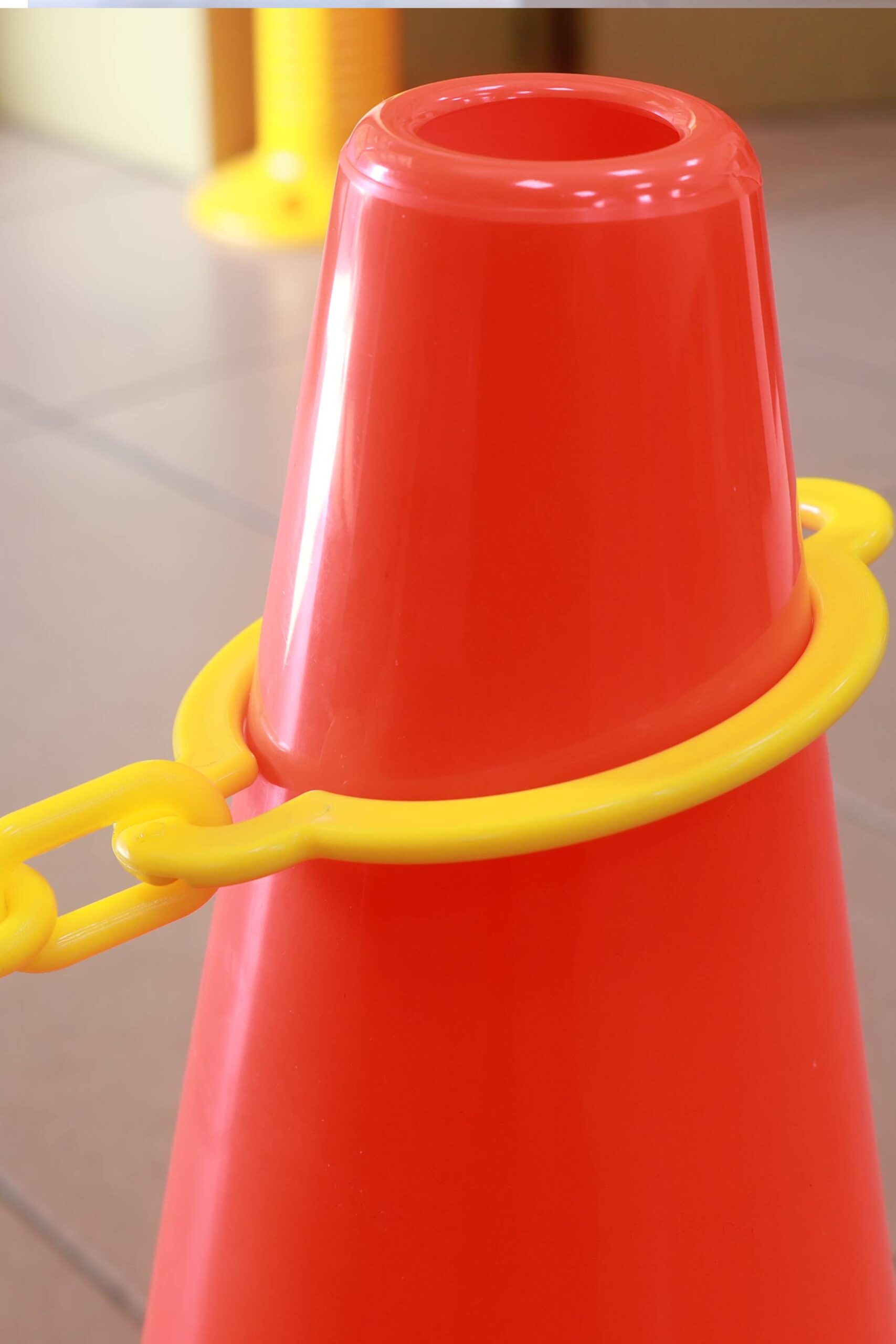
2. The Efficiency Specialist: Traffic Cone Ring – Type II (Quick-Open & Anti-Jam)
In environments where movement is frequent—such as vehicle lane guidance—the smoothness of the chain is vital.
- Core Design: Engineered with a “Quick-Open” structure that prevents the chain from jamming against the hook. This allows the chain to slide freely when adjusting cone distance or under external tension.
- Technical Specifications: Designed for fluid operation, significantly reducing the risk of chain tangling or rings slipping off.
- Best Scenarios: Temporary checkpoints, marathon route guidance, and dynamic parking lot flow management.
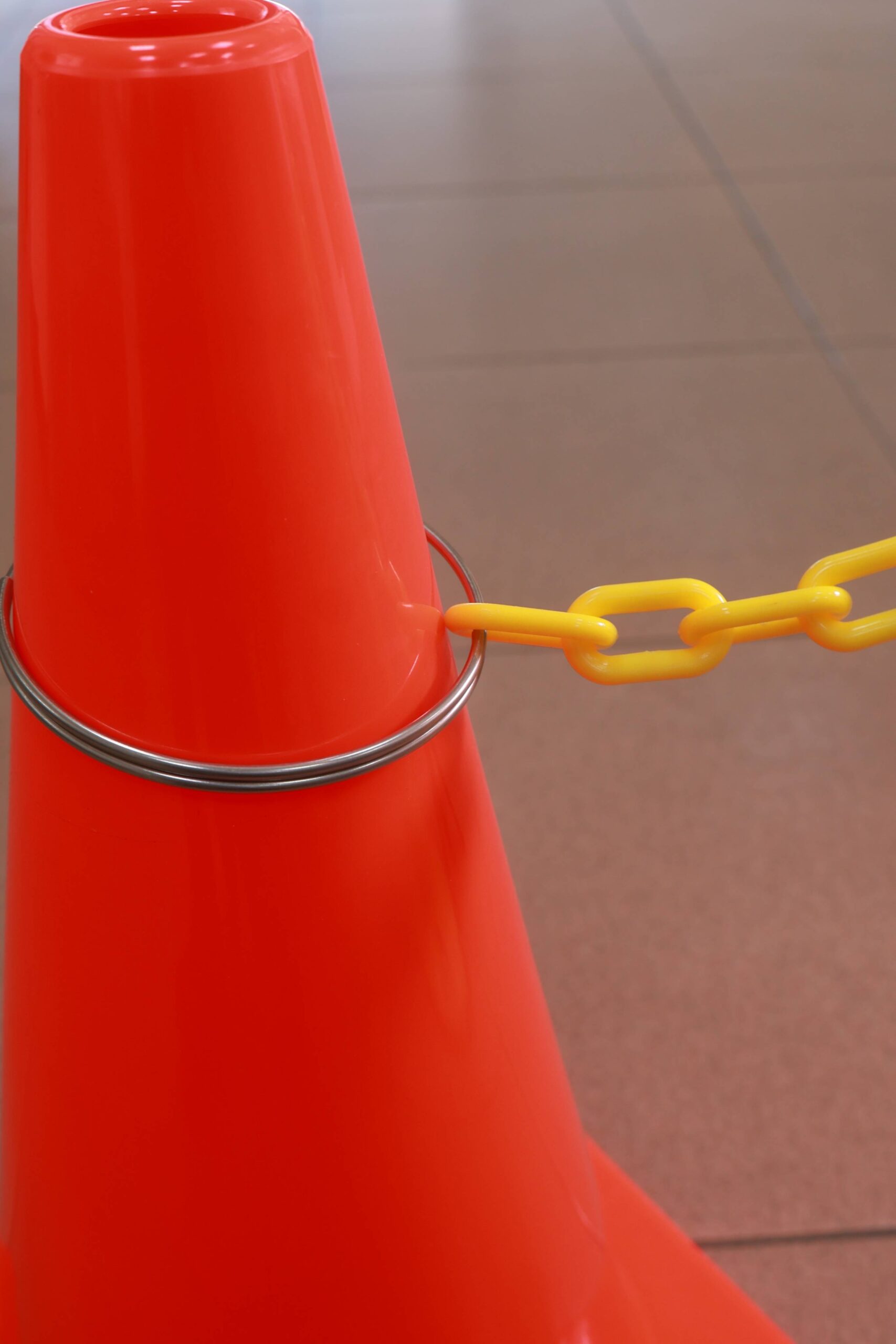
3. The Ultimate Outdoor Solution: Stainless Steel Cone Ring (Elastic Swivel Design)
For harsh weather conditions or larger cones, the stability of metal is far superior to plastic.
- Core Design: Manufactured from high-grade Stainless Steel, eliminating the risk of plastic embrittlement caused by long-term UV exposure. The “Elastic Swivel” allows for one-second chain attachment, even while wearing heavy work gloves.
- Technical Specifications: 10cm inner diameter, specifically designed for large or weighted heavy-duty traffic cones.
- Best Scenarios: Coastal projects with high salinity, long-term outdoor parking lots, and high-wind areas like bridge construction.
Selection Guide: How to Choose the Right Ring
When selecting a traffic cone ring, we recommend evaluating your needs through these three lenses:
- Cone Size: For large-scale traffic cones, the 10cm Stainless Steel Ring is the recommended choice.
- Project Duration: For short-term indoor projects, Type I or Type II rings are sufficient. However, for outdoor placements exceeding three months, the Stainless Steel Ring offers the highest return on investment.
- Operational Habits: For teams that frequently adjust barrier distances, the Type II Quick-Open design is the best way to avoid the frustration of tangled chains.
Upgrading your safety equipment is not just about compliance; it is about improving operational efficiency and reinforcing your brand’s professional image.
【Contact Us for Professional Consultations】 For questions regarding specifications or bulk orders, please feel free to reach out:
- Email: sales@pinkbrand.com
- Official Website: https://pbpcc.com
- Professional Service, Dedicated to Your Site Safety.